
Service · Geotechnical
Geotechnical & dolomite investigation in South Africa
Site investigations, test pits, foundation recommendations and dolomite stability assessments for safe development.
What is a geotechnical investigation?
A geotechnical investigation tests the soil and rock on a site to show how the ground will behave under a structure: whether it will settle, heave or collapse, and what foundations it needs. On dolomite land, a dolomite stability investigation also assesses the risk of sinkholes and subsidence.
Before anything is built, the ground has to be understood. We investigate soil and rock conditions and turn the findings into practical foundation and earthworks recommendations.
Large parts of Gauteng and North West are underlain by dolomite, where sinkholes and subsidence are a real risk. We carry out dolomite stability investigations so that developments on dolomitic land can be designed and approved properly.
Last updated
When you need it
When do you need geotechnical work?
- Before township establishment or a new housing development
- Before designing foundations for schools, clinics, warehouses or towers
- When the site is on or near dolomite, which most municipalities will flag
- For solar and wind farms, pipelines, roads and dams
- When cracks or subsidence appear in existing buildings
How it works
Our process, step by step
- 01
Desktop study
Geological maps, dolomite area maps, aerial imagery and previous reports show what to expect and where to test.
- 02
Field investigation
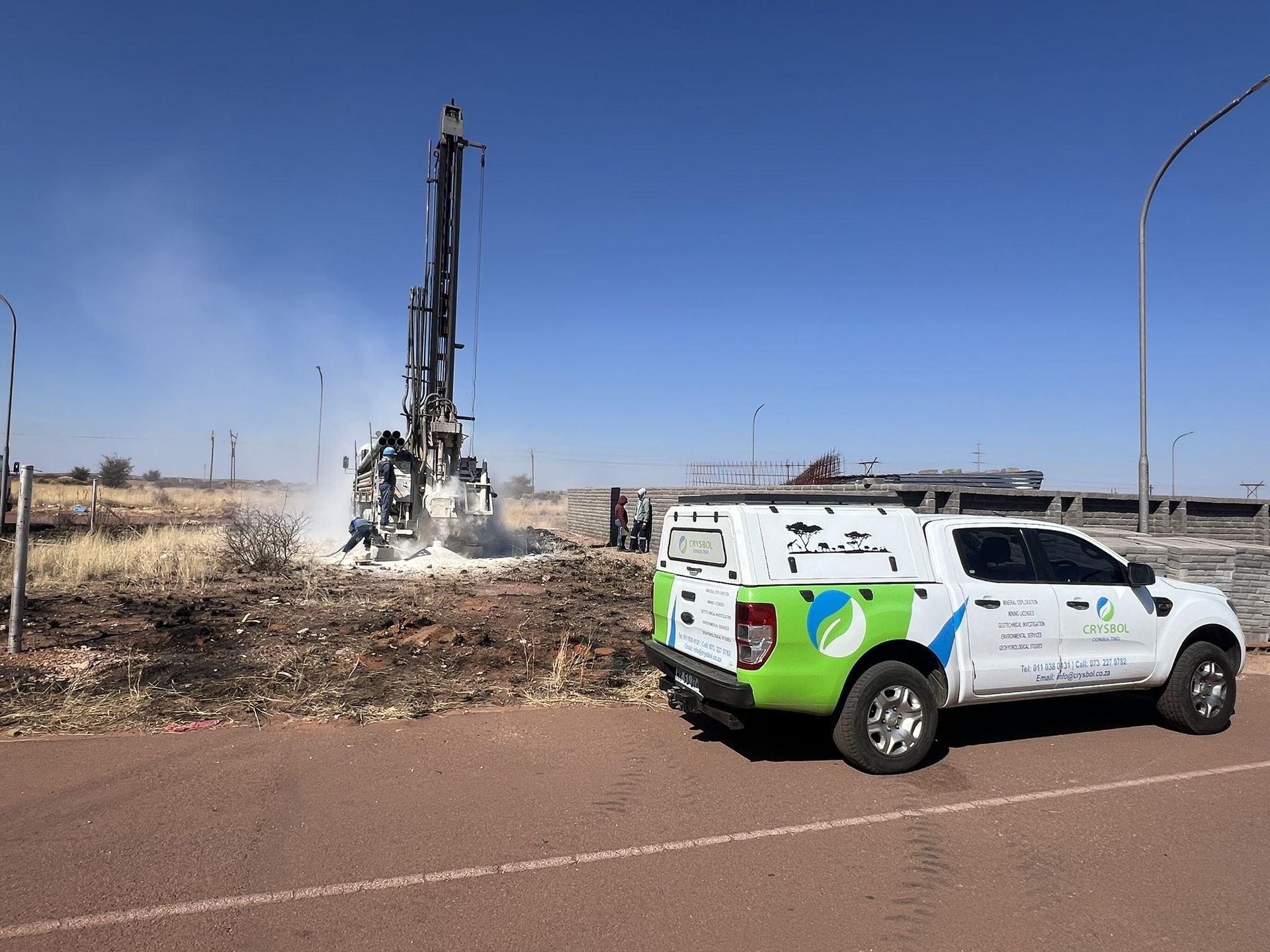
Test pits are excavated, profiled and sampled. On dolomite we add percussion drilling and, where needed, gravity surveys to find cavities and depth to bedrock.
- 03
Laboratory testing
Samples go to an accredited laboratory for foundation indicator, compaction and strength testing.
- 04
Analysis and zoning
We classify the ground, assign NHBRC site classes and, on dolomite, inherent hazard classes and dolomite area designations.
- 05
Report
Foundation and earthworks recommendations, drainage and water precautions, and the dolomite risk management measures the site needs.
What the work covers
- 01Phase 1 and Phase 2 geotechnical site investigations
- 02Test pit excavation, profiling and sampling
- 03Laboratory testing coordination
- 04Dolomite stability investigations and hazard zoning
- 05Foundation and earthworks recommendations
- 06Borrow pit and construction material investigations
Standards and references
- SANS 1936 (Parts 1–4)
- Development of dolomite land: how dolomite land is investigated, designed, built on and maintained.
- SANS 634
- Geotechnical investigations for township development.
- NHBRC Home Building Manual
- Site class designations used to select foundation types for houses.
In the field
Our geotechnical work on site
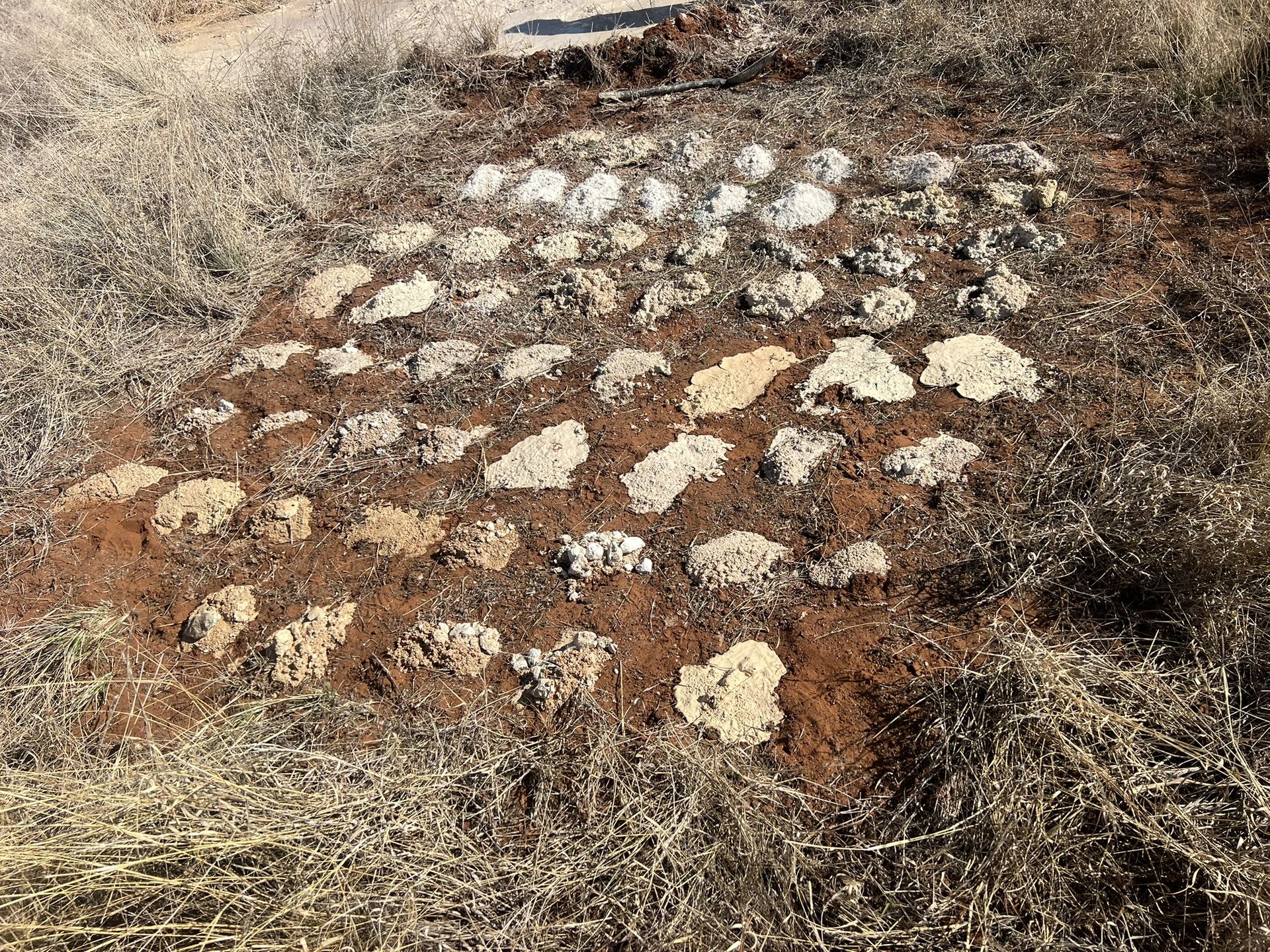
Rows of percussion drill chips laid out by depth for logging 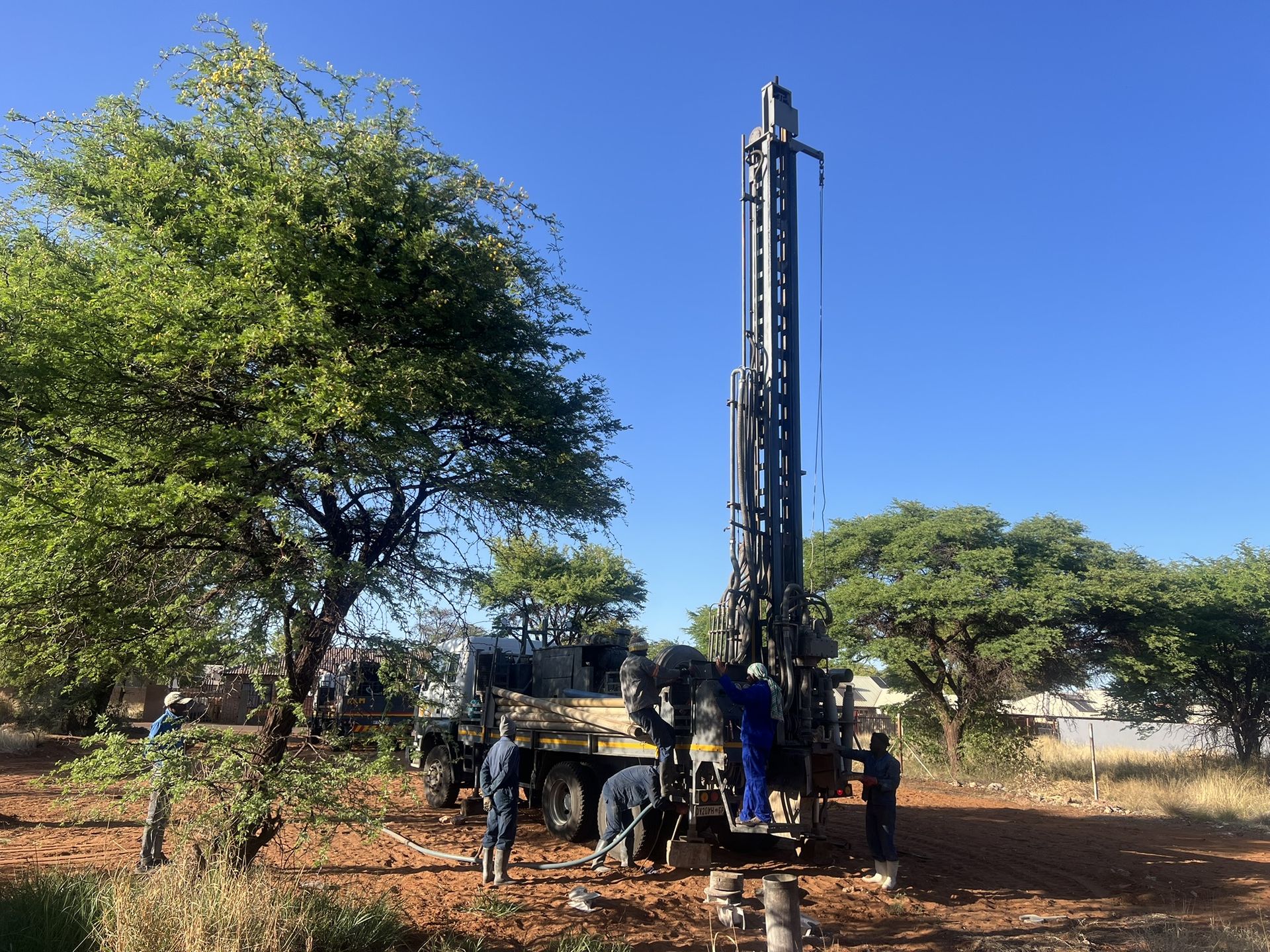
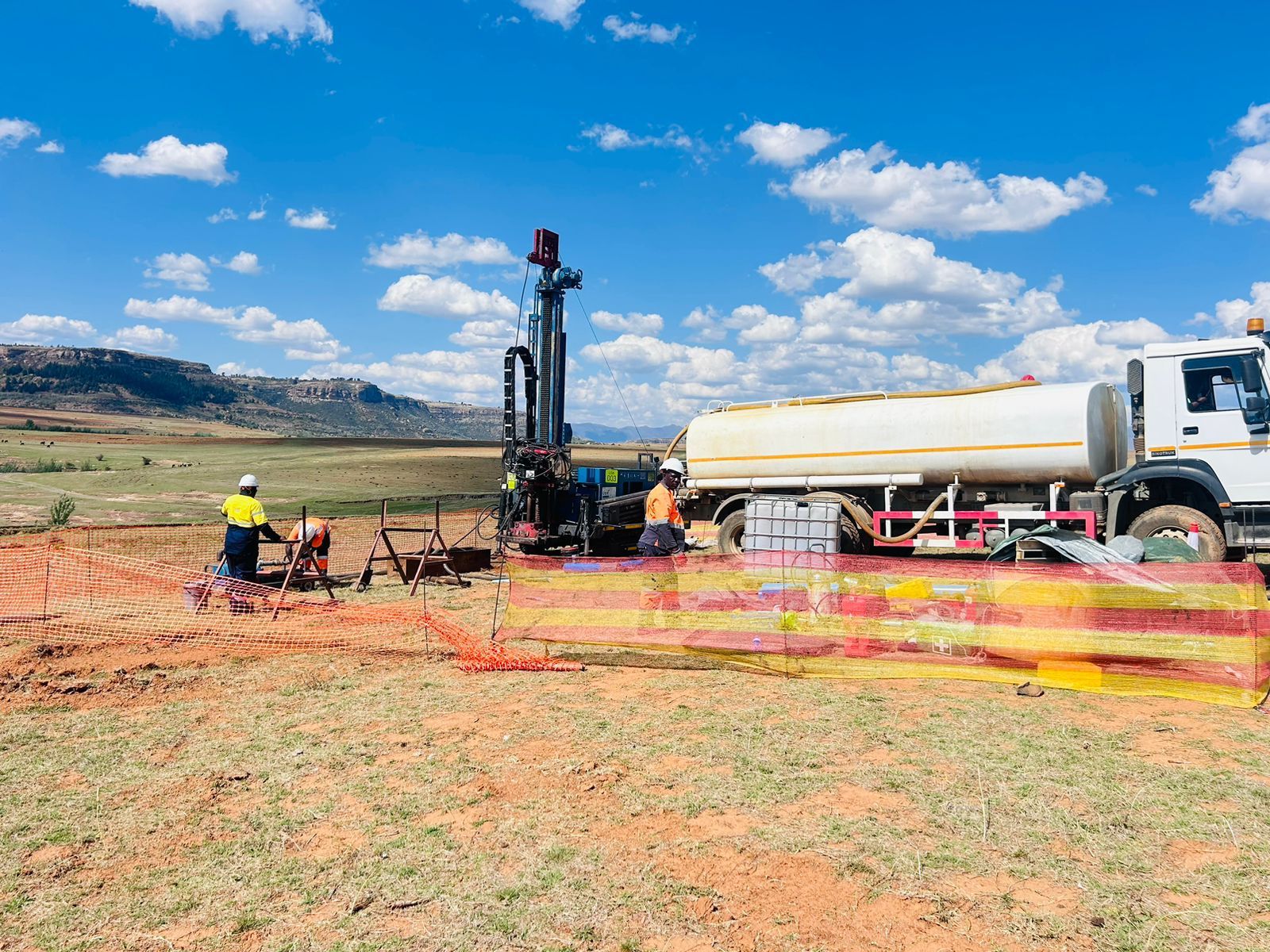
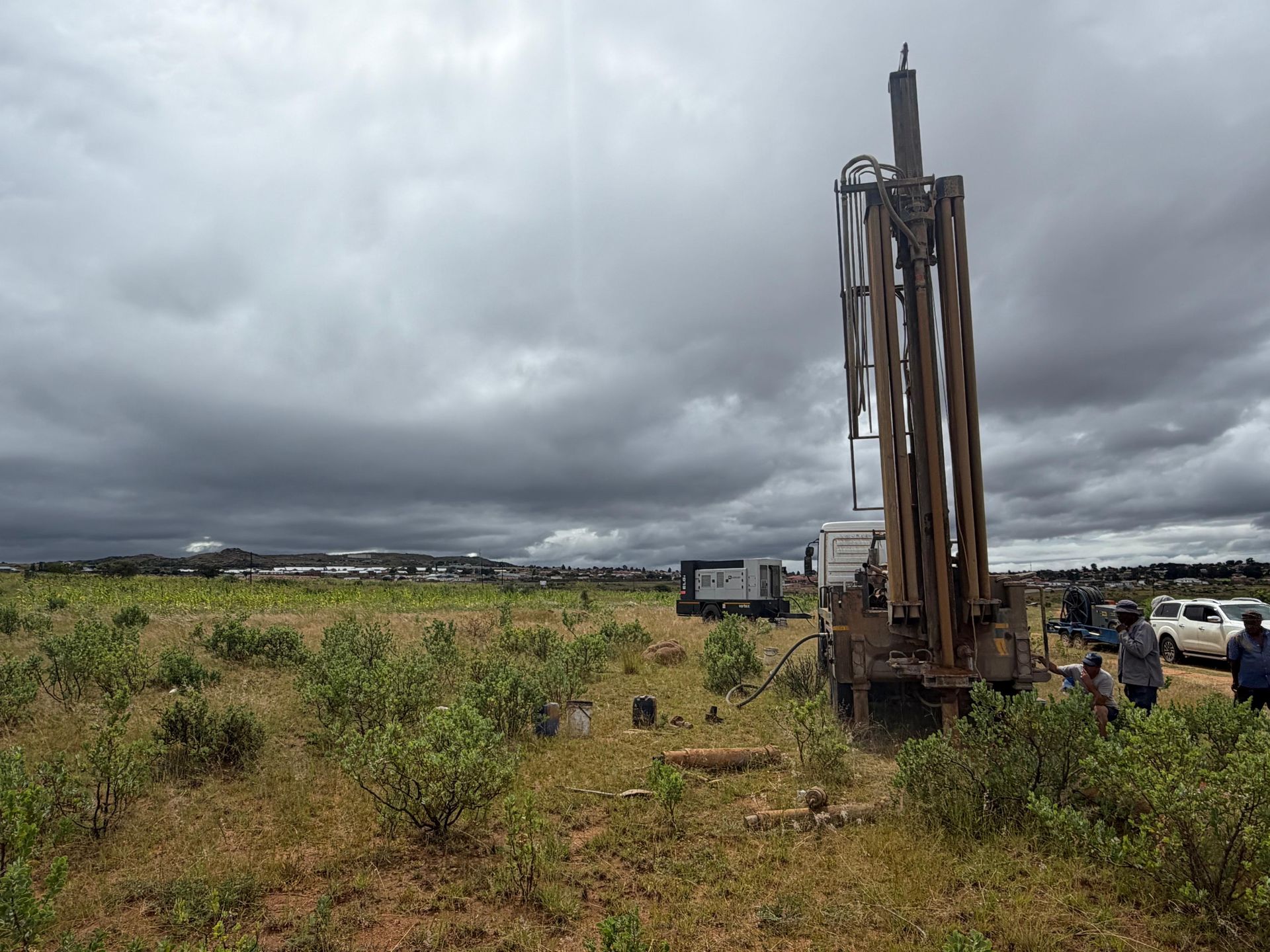
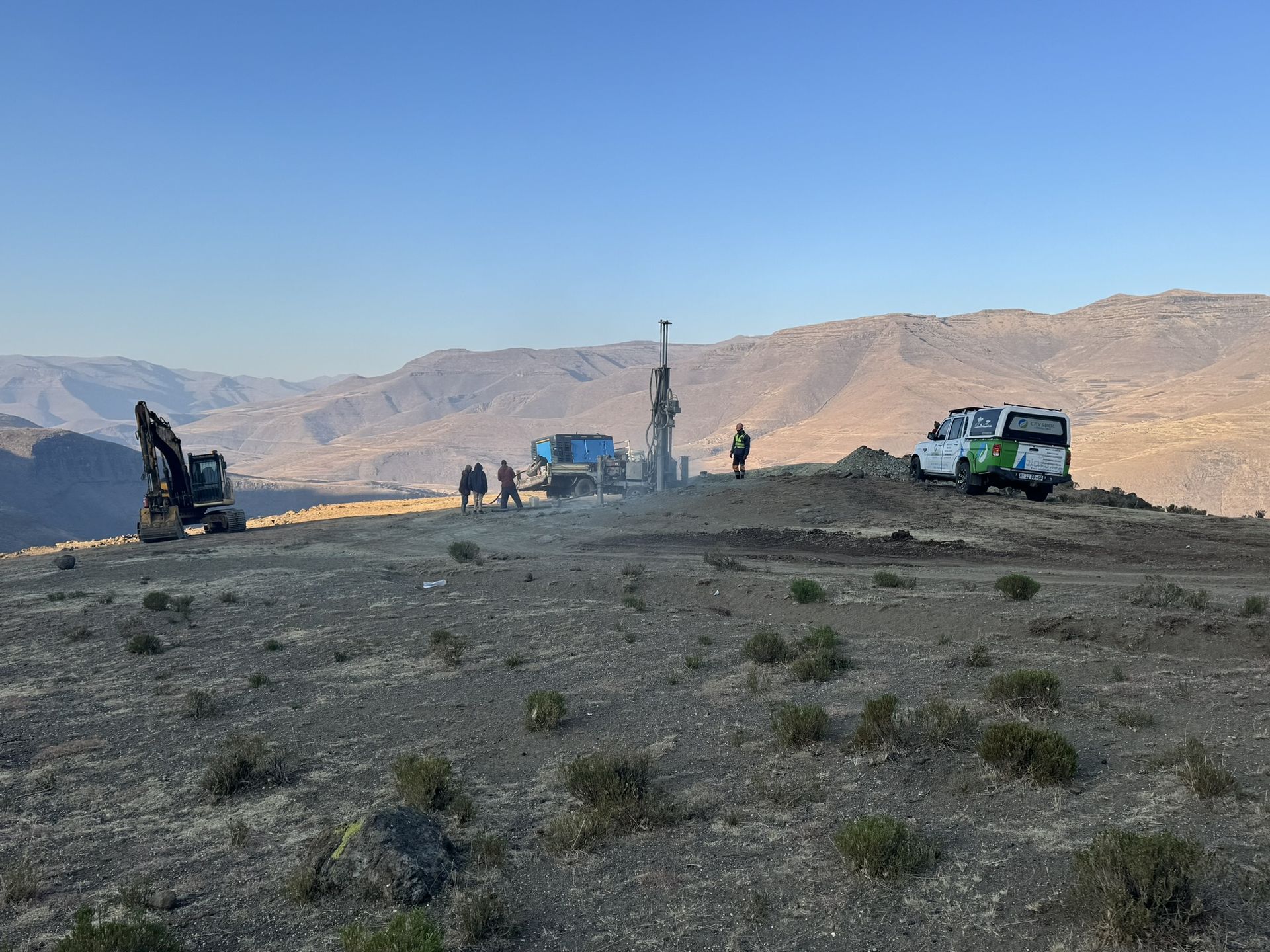
Percussion drill rig and crew on a residential site 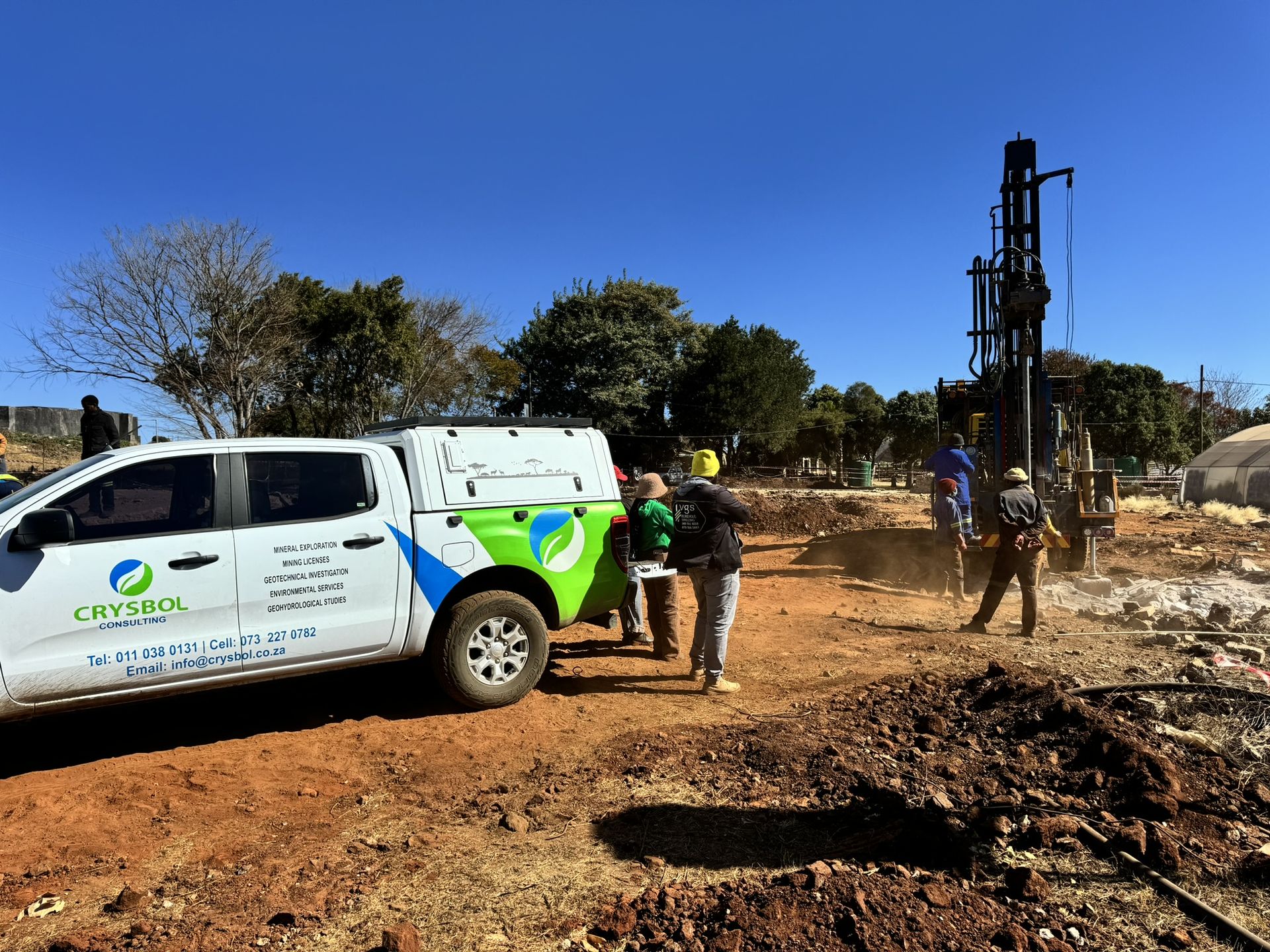
Crysbol vehicle beside a drill rig on site 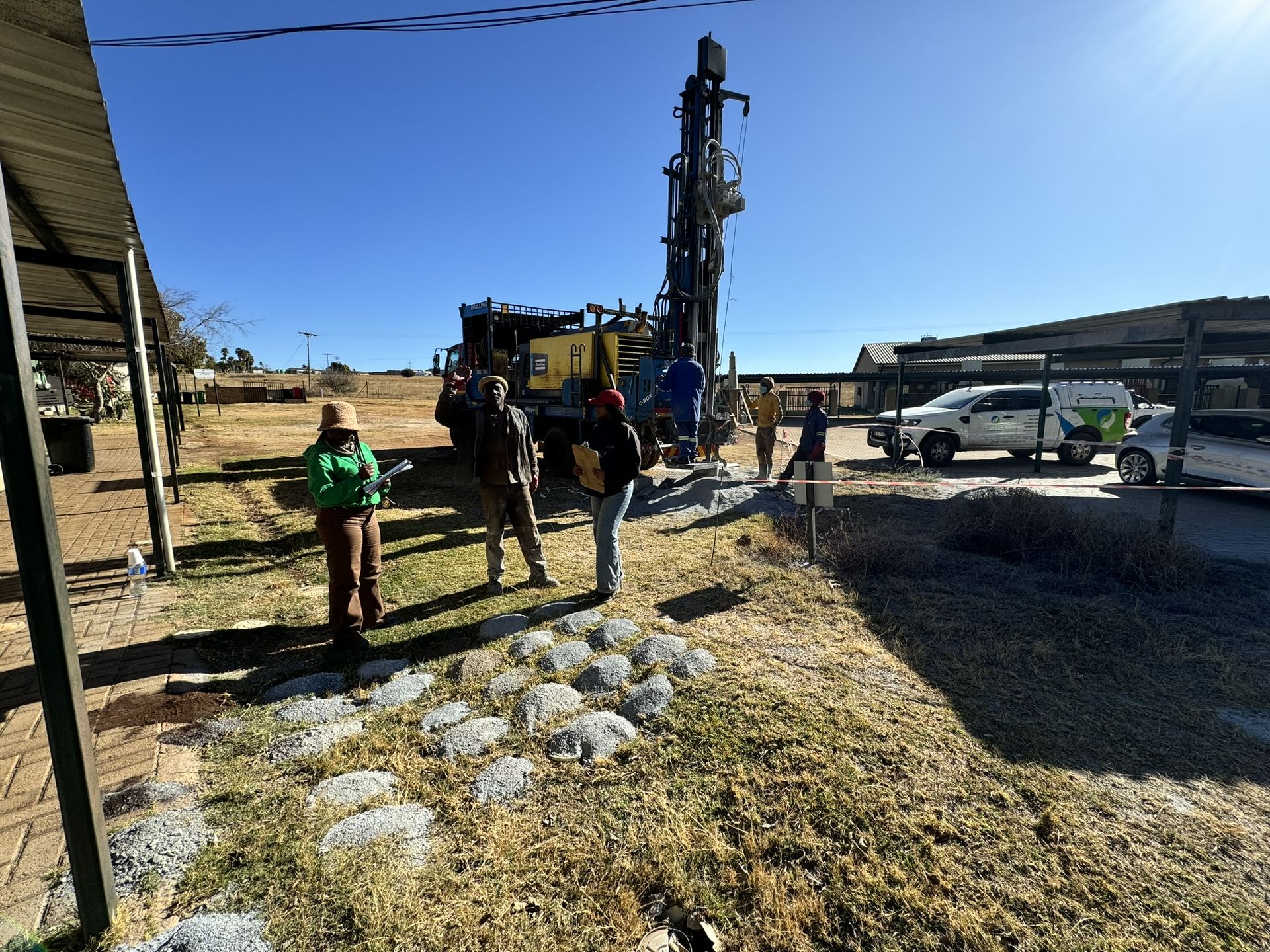
Crew beside rows of drill chip samples and the rig 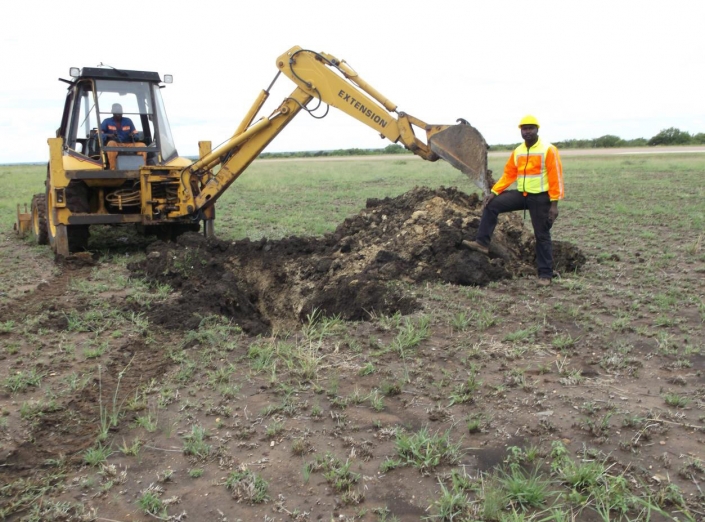
TLB excavating a geotechnical test pit while a geologist watches 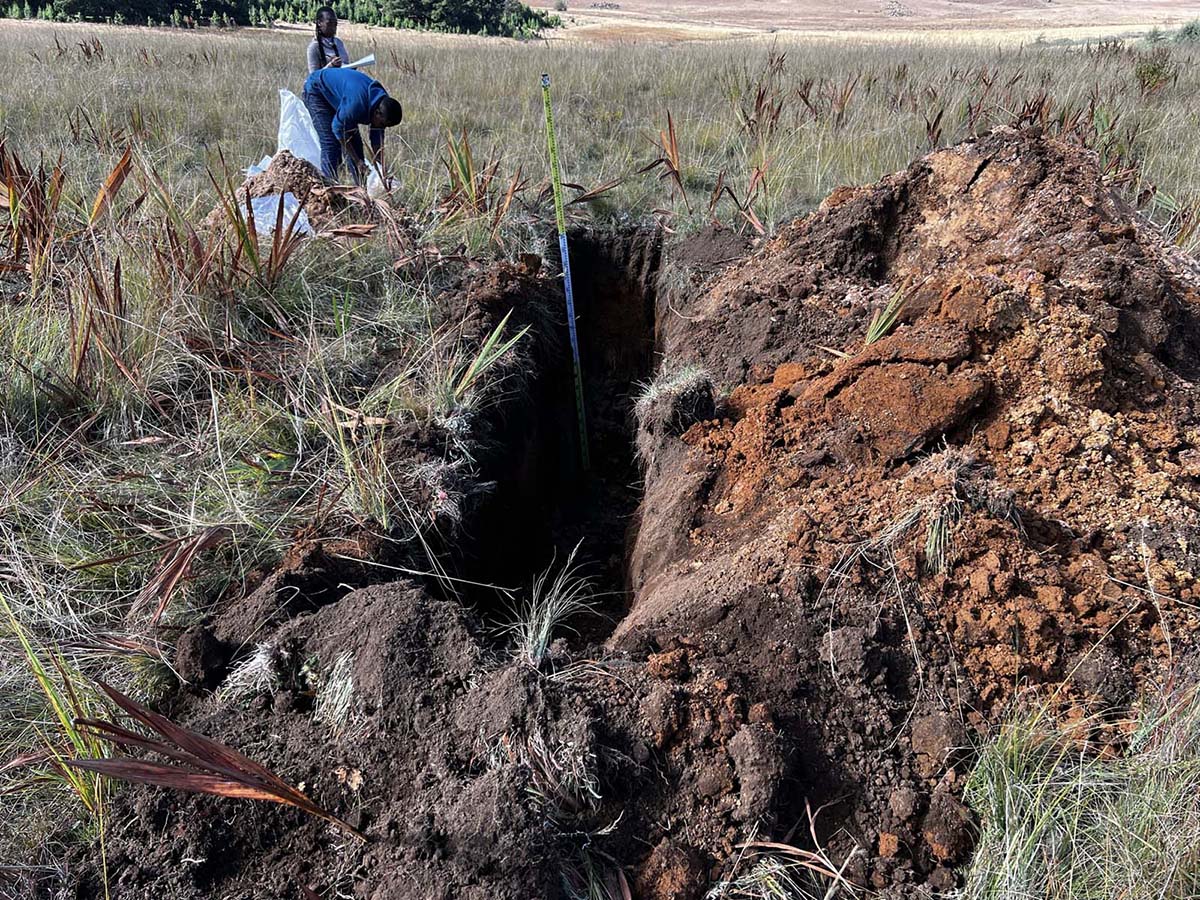
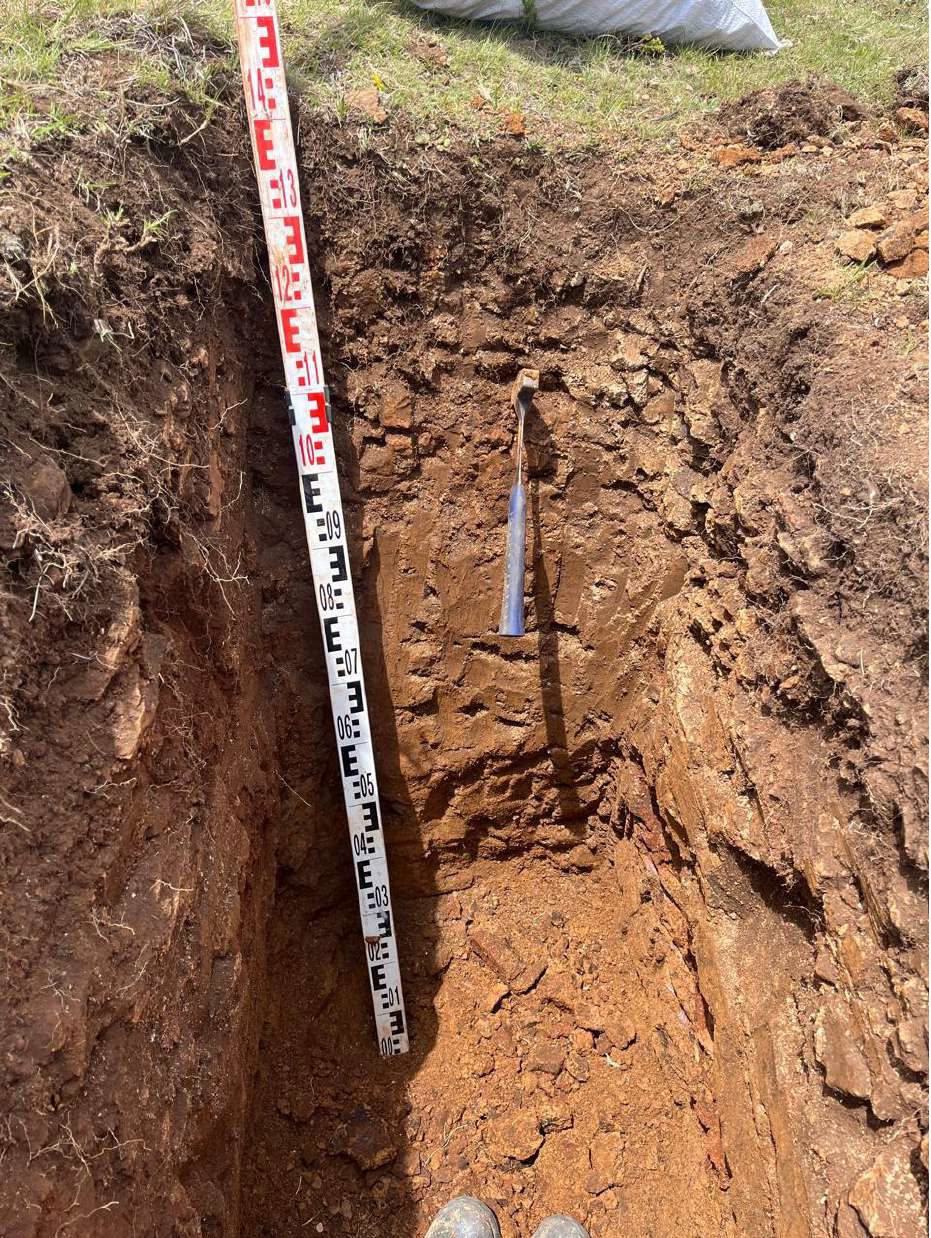
Open test pit showing the soil profile
Recent projects
Geotechnical & dolomite investigation: recent work
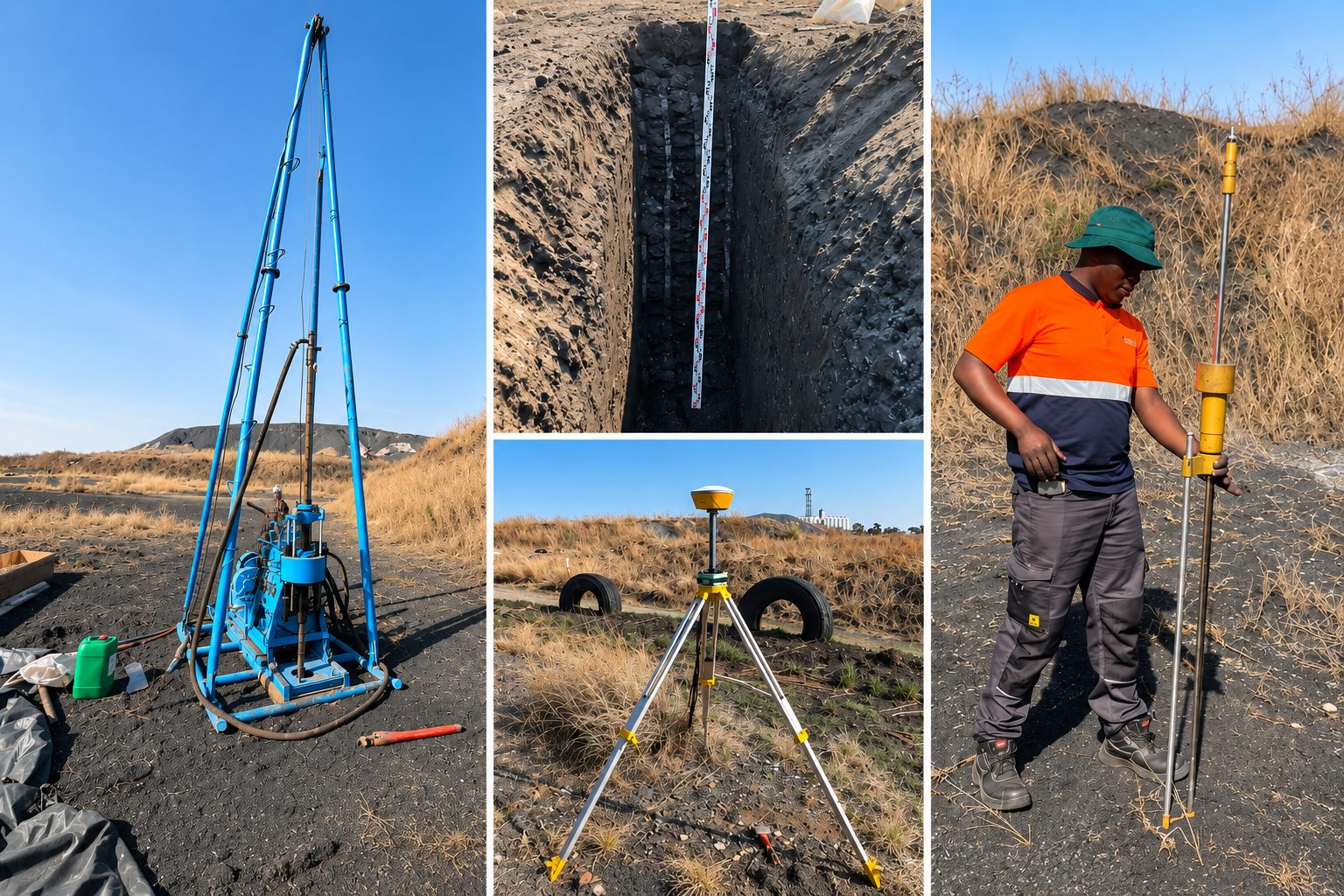
Delmas Coal Mine, Mpumalanga · September 2026
Geotechnical investigation for a 150 TPH DMS coal processing plant
An investigation of the proposed site for relocating a 150 TPH Dense Medium Separation (DMS) coal processing plant and its infrastructure. The scope covered a desktop assessment, rotary core drilling, trial pits, DCP testing, engineering geological profiling, soil and rock sampling, laboratory testing and a detailed topographical survey to set foundation design parameters.
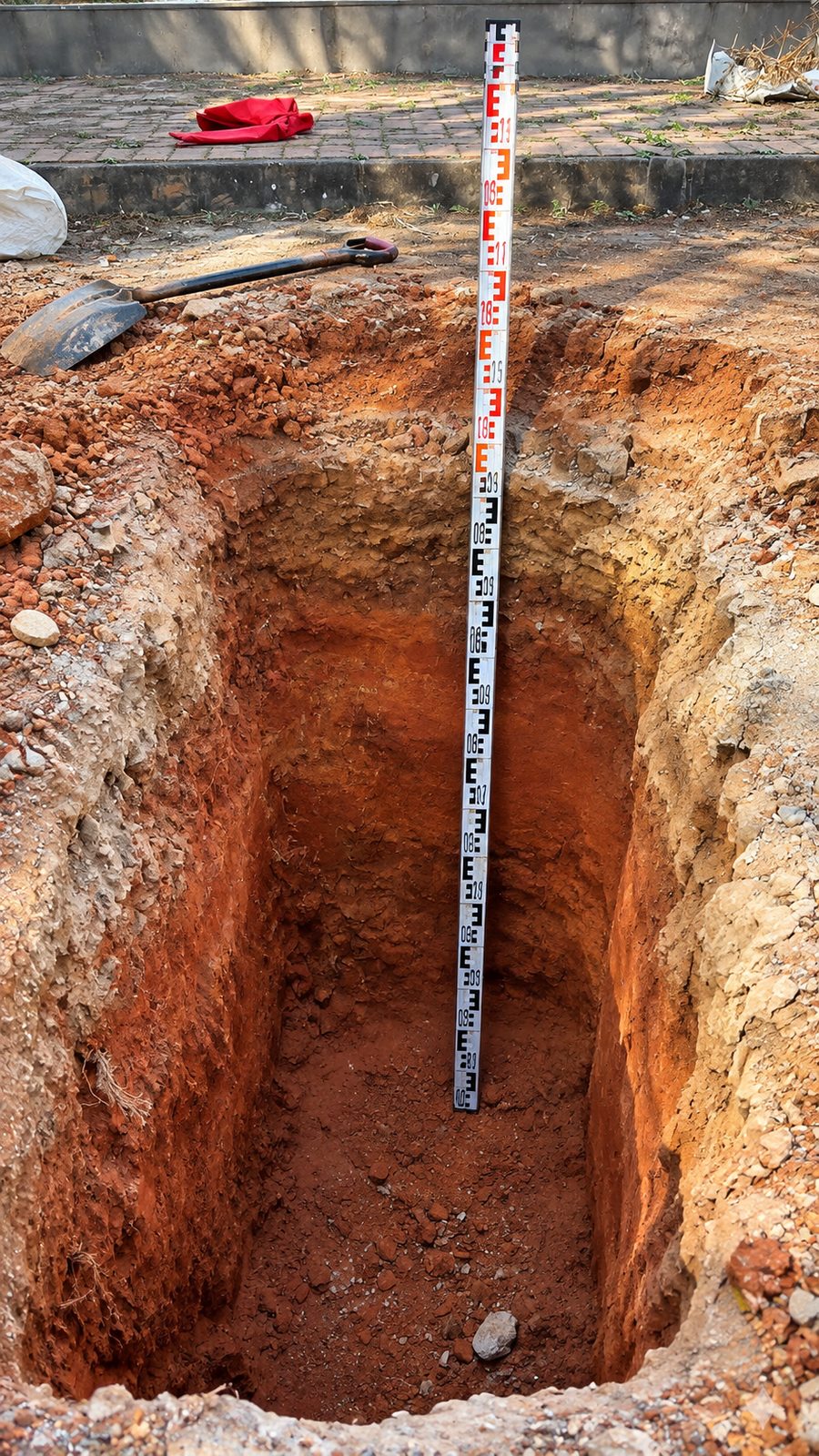
Newtown, Johannesburg, Gauteng · August 2026
Forensic geotechnical investigation of the Turbine Hall building
A forensic investigation of reported building vibrations and of how the existing foundations and ground were performing, through site reconnaissance, trial-pit excavation and profiling, soil sampling, laboratory testing and engineering assessment.
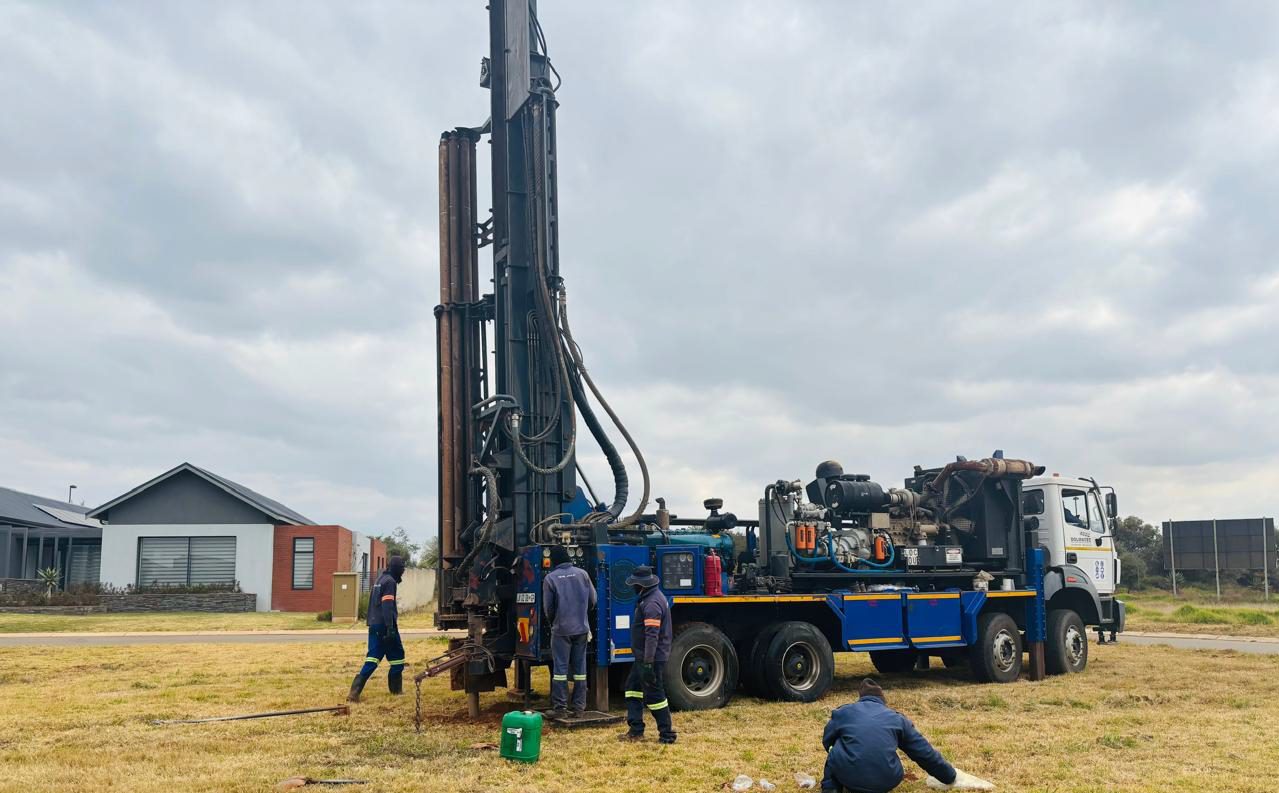
Serengeti Estate, Kempton Park, Gauteng · June 2026
Dolomite stability and geotechnical investigation at Serengeti Estate
An investigation for a proposed double-storey home, with percussion drilling, trial pits, DCP testing, soil profiling and laboratory analysis to assess dolomite stability, sinkhole and subsidence risk and foundation requirements.
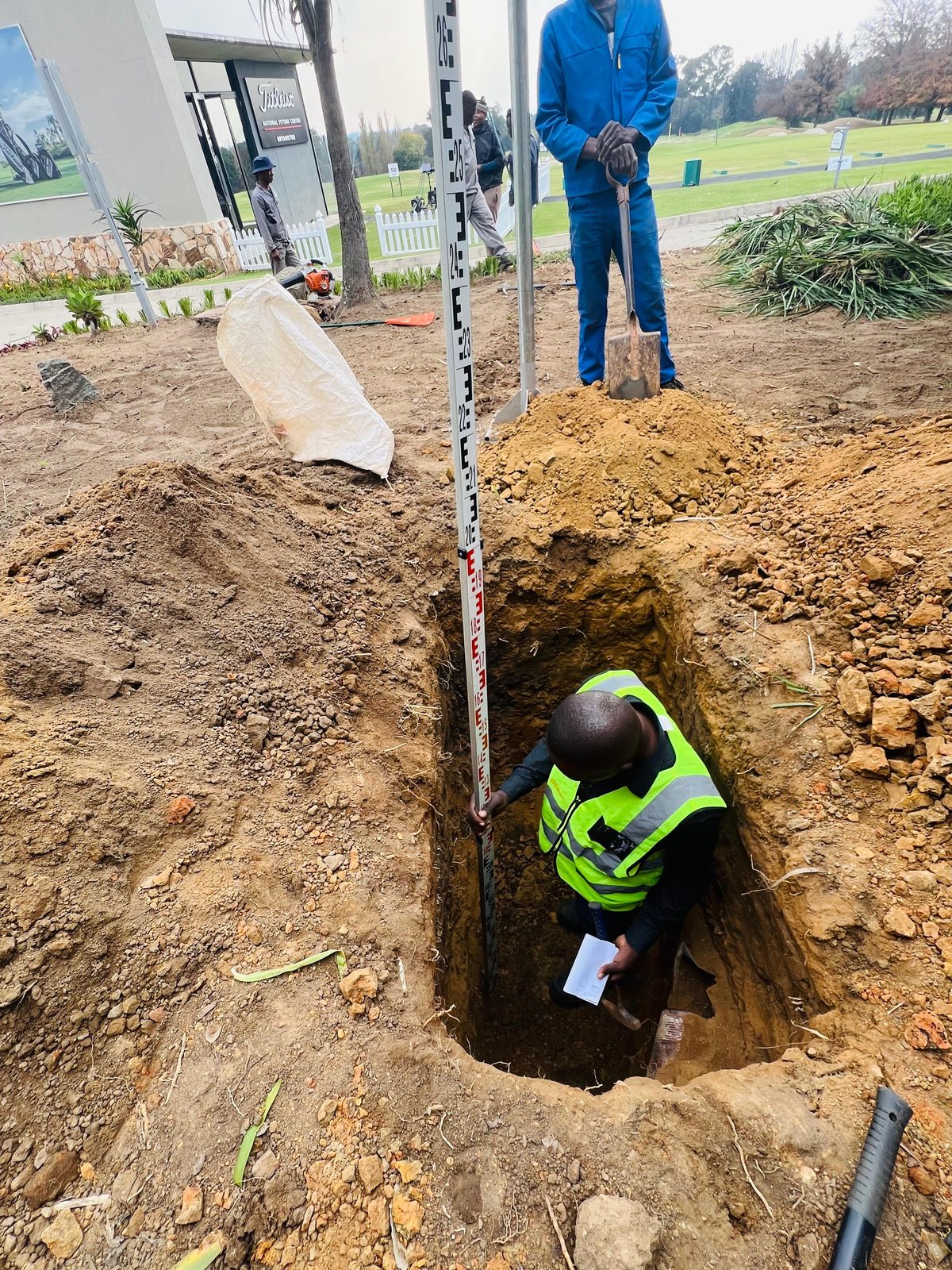
Bryanston, Sandton, Gauteng · June 2026
Geotechnical investigation for a fitness centre at Bryanston Country Club
An investigation for a proposed double-storey fitness and relaxation facility, a roofed padel court and associated infrastructure, through a desktop assessment, trial pits, DCP testing, soil sampling and laboratory testing.
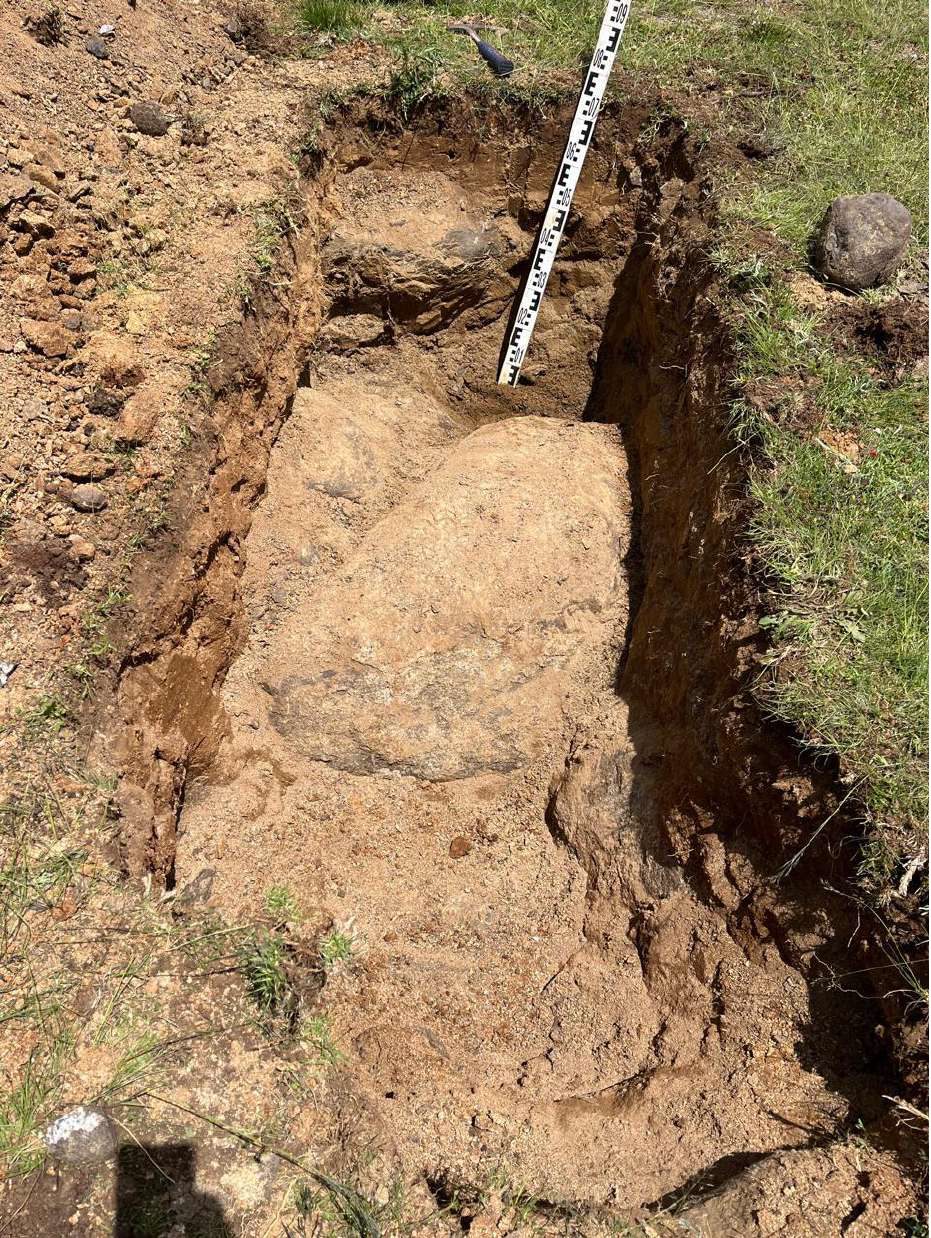
Ha-Patrick Village, Lesotho · December 2025
Geotechnical investigation for Kome Caves Lodge
An investigation of the site for the proposed lodge, with a desktop assessment, five trial pits, soil profiling and sampling, laboratory testing, site classification and engineering analysis.
Semonkong, Maseru, Lesotho · December 2025
Geotechnical investigation for Echoes of the Falls Lodge
An investigation of the site for the proposed lodge, with a desktop assessment, five trial pits, soil profiling and sampling, laboratory testing, site classification and engineering analysis.
Questions
Geotechnical & dolomite investigation: frequently asked questions
How do I know if my property is on dolomite?
- Start with your municipality's dolomite maps or Council for Geoscience records. Zoning certificates in dolomite areas often carry a note too. If you are unsure, we can do a desktop check before you commit to a full investigation.
What is a site class?
- A site class is the NHBRC designation for how the ground behaves: for example collapsible (C), expansive (H), compressible (S) or rock (R). It tells the engineer which foundation design to use. Our reports assign site classes to each zone of a site.
What is the difference between a Phase 1 and Phase 2 geotechnical investigation?
- A Phase 1 (feasibility) investigation gives a broad picture of ground conditions to confirm a site is suitable and guide the layout. A Phase 2 (detailed) investigation tests the final layout more densely and provides the design information for foundations and services.
How long does a geotechnical investigation take?
- Field work for a typical residential or small commercial site takes a few days, and laboratory testing and reporting add a few weeks. Dolomite investigations that need drilling take longer. We give a programme with the quote.
Do you do geotechnical investigations for solar farms?
- Yes. Solar and wind projects need ground investigations for pile and foundation design, soil corrosivity and access roads. We plan test pits and in-situ testing around the proposed layout.
Where we offer it
Geotechnical & dolomite investigation in all nine provinces
- Geotechnical & dolomite investigations in GautengOur most requested service in Gauteng: geotechnical investigations for housing, commercial and infrastructure developments, and dolomite stability investigations.
- Geotechnical & dolomite investigations in MpumalangaSite investigations for mine infrastructure, haul roads, housing and municipal projects.
- Geotechnical & dolomite investigations in LimpopoInvestigations for mine infrastructure, schools, clinics and municipal housing.
- Geotechnical & dolomite investigations in North WestDolomite stability and geotechnical investigations for municipal housing and infrastructure.
- Geotechnical & dolomite investigations in Free StateInvestigations for housing, agricultural infrastructure and municipal works.
- Geotechnical & dolomite investigations in KwaZulu-NatalSlope stability and foundation investigations for developments on steep and weathered ground.
- Geotechnical & dolomite investigations in Northern CapeFoundation investigations for solar, wind and mine infrastructure.
- Geotechnical & dolomite investigations in Eastern CapeInvestigations for wind farms, roads, schools and housing.
- Geotechnical & dolomite investigations in Western CapeInvestigations on Malmesbury shale, Cape granite and Cape Flats sands for developments.
Need geotechnical support?
Send us the site location and a short description of the work. We will reply with a scope and quote, usually within two working days.